
Dental Bridges Colchester
Close the Gap & Refresh Your Smile
Teeth can be lost for a variety of reasons, from cavities and decay to accidents and everything in between. If you have a gap in your smile, our Colchester team is ready to assist you with reliable and strong tooth replacement solutions. After a thorough evaluation, we might recommend that you receive a dental bridge. What is a dental bridge, and what benefits can this type of restoration deliver? Continue reading below to discover key information, or get in touch with our team directly to set up your consultation.
Why Choose Elevate Dental for Dental Bridges?
- Comfortable & Precise Digital Impression Technology
- Lifelike Restorations That Complement Your Smile
- Insurance Welcomed & Multiple Payment Options Accepted
What Is a Dental Bridge?

A dental bridge usually consists of three or more units fixed together, including two crowns and at least one pontic (artificial tooth) between them. It replaces one or more missing teeth in a row. In addition to restoring the function of your smile, dental bridges prevent the surrounding teeth from drifting out of alignment and allow more fixed surface area for chewing.
Bridges can be made out of various materials, including different types of metals as well as tooth-colored materials. We usually recommend tooth-colored materials because they look very natural and are durable enough to last for years.
Types of Dental Bridges
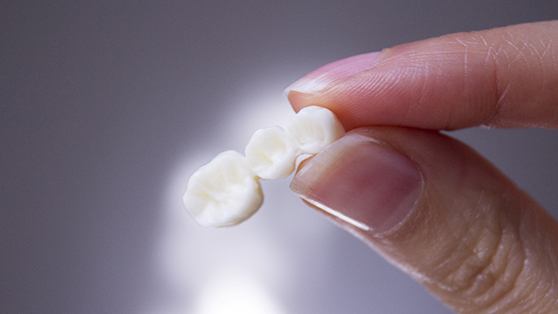
There are a few different types of dental bridges, with the most common options being traditional fixed bridges and implant bridges. When you attend your consultation, we will assess the state of your oral tissues, the extent of your tooth loss, and other relevant factors to determine the type of restoration that best fits your unique situation.
Here is an overview of the two most common types of bridges:
Traditional Dental Bridges
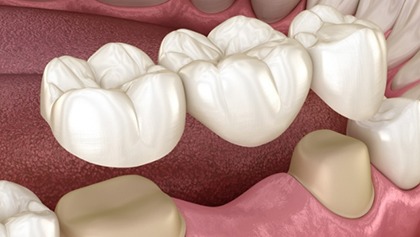
To support a traditional fixed bridge, a sturdy crown is placed on each tooth surrounding the gap in the smile (called the abutment teeth). Then, a pontic tooth fills the space between the crowns. A fixed bridge cannot be removed. Think of it just like any other bridge you have seen! It needs two supports to cross over the water. Unlike a removable partial denture, a fixed bridge cannot be removed and is cemented permanently.
Implant Bridges
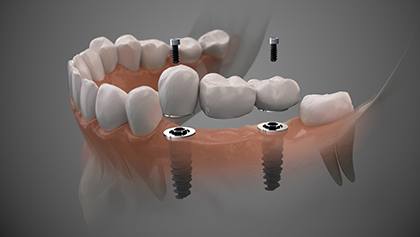
Instead of relying on abutment teeth for support, an implant bridge is supported by two titanium posts (dental implants) that get placed into the jawbone. They act as prosthetic tooth roots. The implants support crowns, and the crowns have one or more pontics between them. Implant bridges are sturdier than non-implant options and have distinct benefits for jawbone health.
The Benefits of Getting a Dental Bridge

As a result of getting a dental bridge, you may enjoy several benefits:
- Improved chewing: Bridges can handle a wide variety of foods. They can also allow you to chew on both sides of your mouth, which is important for muscular balance.
- Easy maintenance: Our team will show you exactly what you need to do to keep your bridge in good shape.
- Longevity: With proper care, a bridge may last for 10 years or longer.
- Prevent dental drift: A bridge prevents other teeth from shifting out of place. This preserves your bite and may even prevent additional tooth loss.